What Is a Cyprus Cat?
The Cyprus cat is best understood as a native cat population, or landrace, rather than one universally standardized pedigree breed. Cats have lived on the Mediterranean island for thousands of years, and the name can describe local cats with varied appearances and backgrounds—not a single set of breed traits.
That distinction matters when you are researching a kitten. Some registries recognize the Aphrodite’s Giant as a distinct breed developed from native Cyprus cats, but it is not simply another name for every Cyprus cat. Ask a breeder or rescue what they mean by the label and request documentation rather than assuming a particular appearance or ancestry.
Cyprus Cat History
Archaeological evidence from the Neolithic settlement of Shillourokambos includes a cat buried beside a human, dating to roughly 7500 BCE. The find is an important early sign of the relationship between people and cats, though it does not prove that modern Cyprus cats descend directly from that individual. Cats likely reached the island with people and became valued for controlling rodents around homes, farms, and stored food.
Over many generations, local cats adapted to island life and interbred with other cats brought by travelers. That long, varied history helps explain why Cyprus cats do not share one uniform look. Modern claims of ancient, unbroken pedigree should be treated cautiously unless supported by verifiable records.
Appearance, Coat, and Size
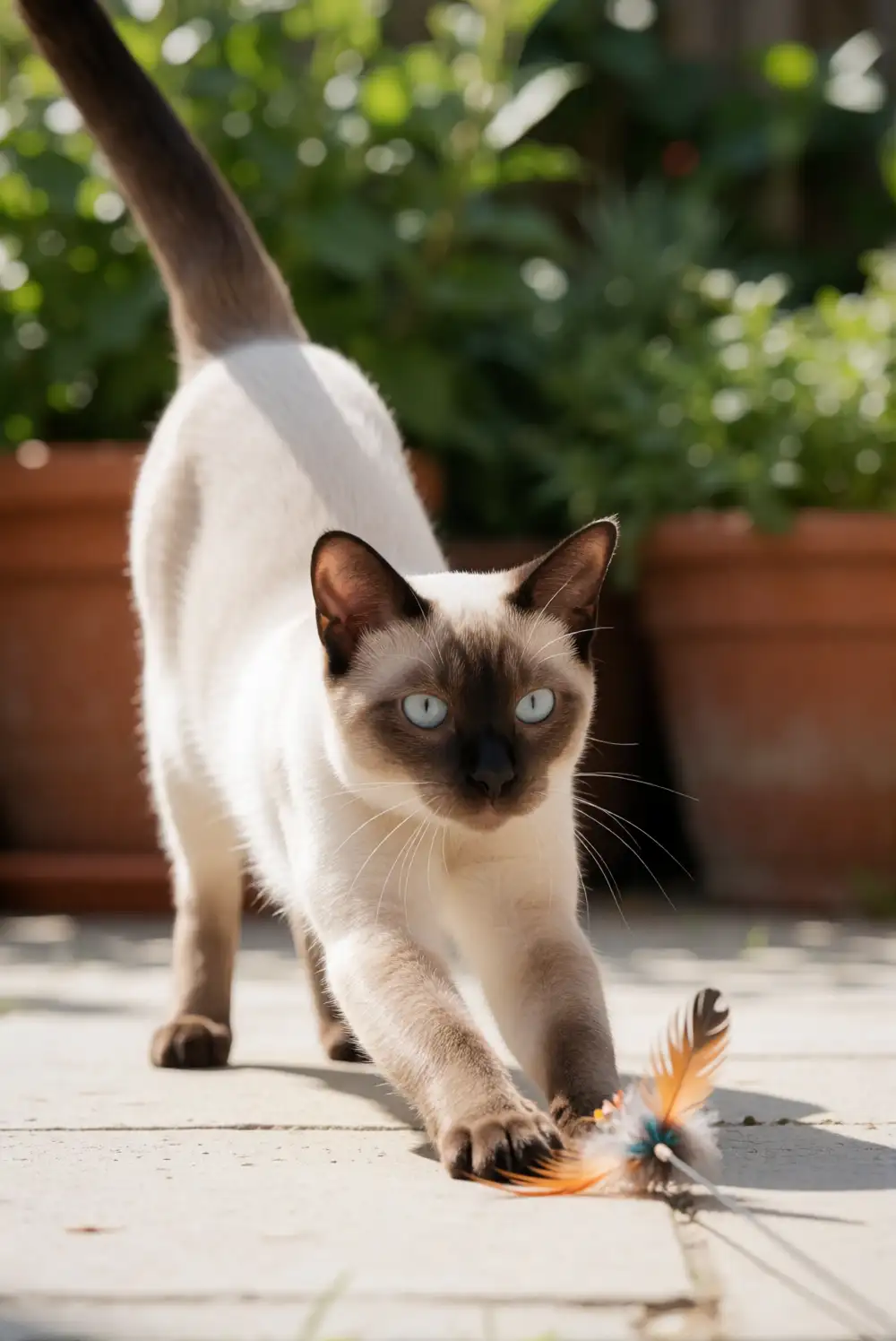
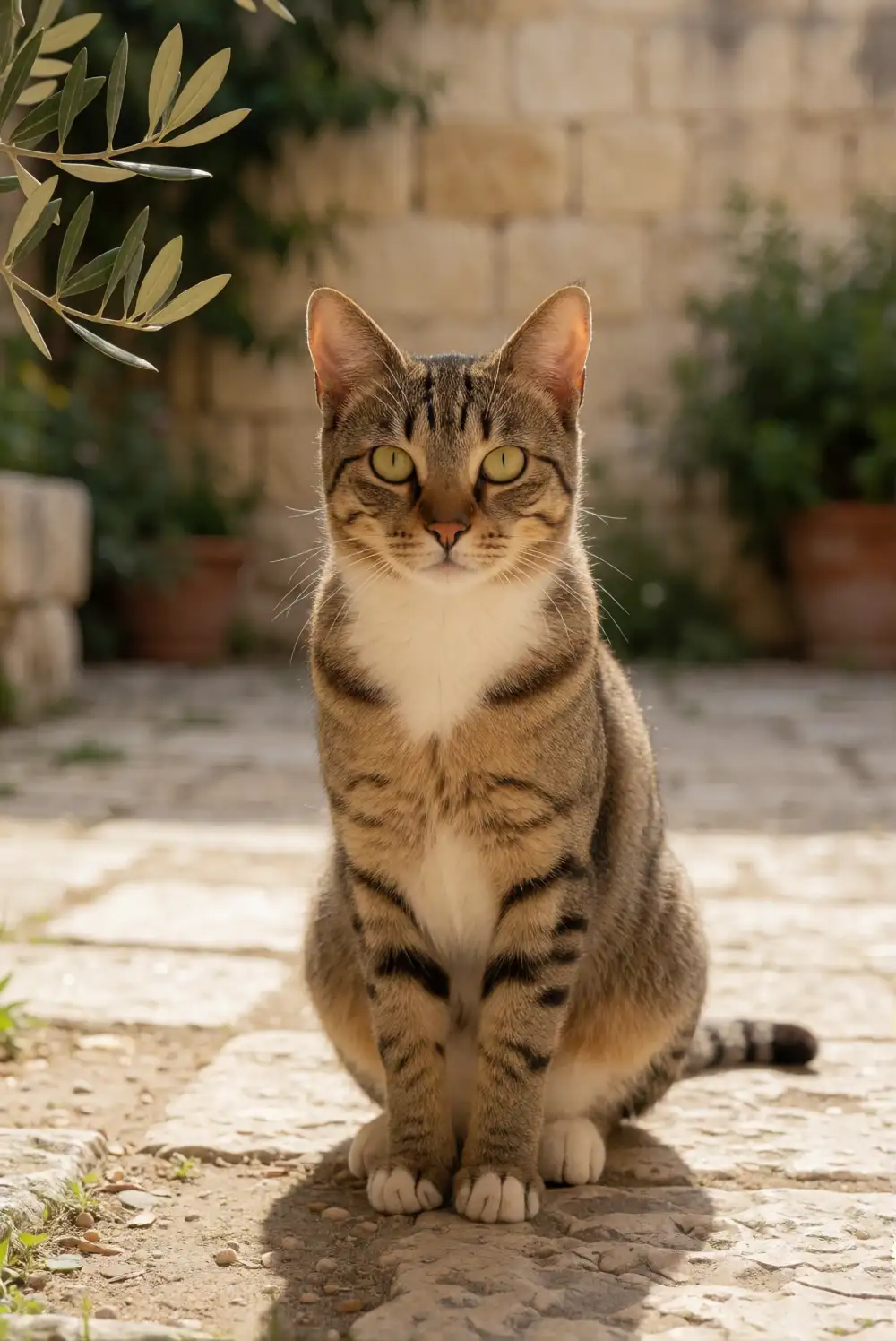
There is no official Cyprus cat standard covering body size, color, or coat. Many cats described by this name have a lean, athletic build, upright ears, and a short coat, while others may be larger or have medium-length fur. Their coloring can include tabby patterns, solid shades, white markings, and combinations of colors. A particular color or pattern is not proof that a cat is a Cyprus cat.
Because the term refers broadly to a population, there is no dependable breed-specific weight range. Ask about the individual kitten’s parents and expected adult size, and look for a healthy, well-proportioned body rather than judging by a label. If a seller advertises an Aphrodite’s Giant, confirm which registry recognizes the cat and what pedigree paperwork is available.
Temperament and Home Life
Personality varies from cat to cat, so no single temperament is guaranteed by the Cyprus name. Individual cats may be outgoing and playful, cautious with new people, or happiest watching household activity from a safe perch. Early socialization, past experiences, and the cat’s own nature all influence how it behaves.
As with any kitten, meet the cat when possible and ask how it responds to handling, everyday sounds, and other animals. A climbing tree, interactive play, and cozy places to retreat can help an active, curious cat settle in. CatHatch lets prospective owners browse available kittens and breeders, but evaluate each cat and source on its own merits.
Grooming, Health, and Everyday Care
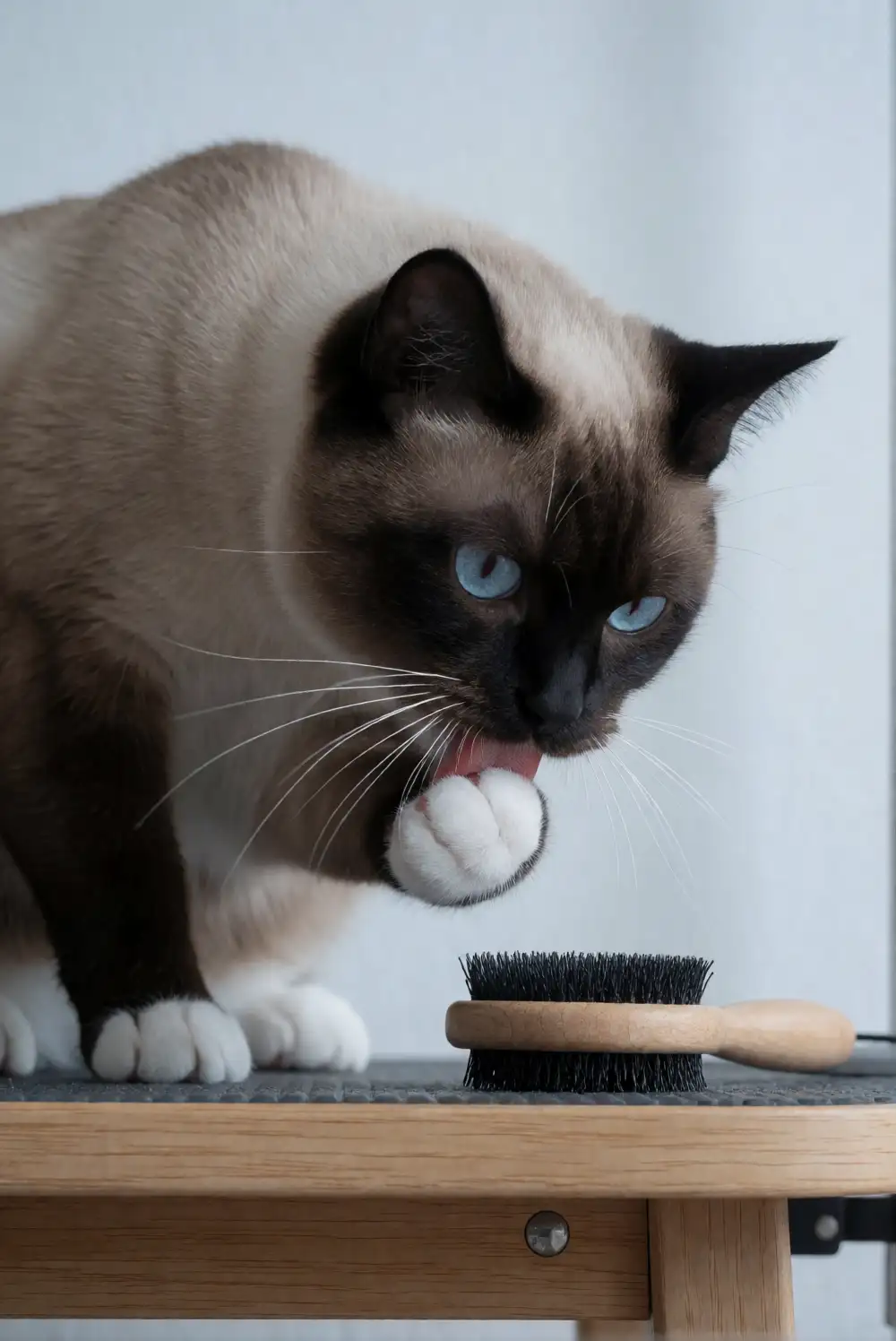
Care depends more on the individual cat’s coat and health than on the Cyprus label. A short-coated cat usually needs a weekly brush; a longer or denser coat may need more frequent grooming to prevent tangles. Keep up with nail trims, dental care, fresh water, and a complete, age-appropriate diet. Regular interactive play and weight checks support long-term fitness.
There is not enough reliable breed-wide health data to claim that Cyprus cats are immune to inherited conditions or have a particular lifespan advantage. A mixed or locally adapted background does not replace veterinary care. Schedule an initial examination, vaccinations, parasite prevention, and spay or neuter care with your veterinarian. For a kitten from a breeder, ask for health records and any relevant screening information for its parents.
Adoption, Breeders, and Price
There is no standard retail price for a Cyprus cat because it is not one uniformly registered breed. Cats identified as Cyprus cats may be available through local rescues, shelters, or private rehoming, while an Aphrodite’s Giant from a documented breeder is a different proposition. Rescue fees vary by location and usually reflect services such as vaccinations, microchipping, and sterilization; ask what is included before adopting.
If you are considering a breeder, request health records, a clear explanation of the cat’s lineage and registry status, and the chance to see where kittens are raised. Be wary of a high price based only on claims of rarity or ancient ancestry. People looking for a kitten can browse available kittens or find Cyprus breeders on CatHatch, then verify the seller’s practices and the kitten’s records directly.
Frequently Asked Questions
Is the Cyprus cat a recognized cat breed?
Cyprus cat usually describes the island’s native cat population, not one standardized pedigree breed. The Aphrodite’s Giant is a separate breed recognized by some registries and should not be confused with every cat from Cyprus.
What does a Cyprus cat look like?
There is no single required appearance. Many are athletic, short-haired cats, but body size, coat length, and colors vary widely.
Are Cyprus cats friendly?
Some are sociable and playful, while others need time to feel comfortable with new people. Meet the individual cat and ask its caregiver about its behavior and socialization.
How much does a Cyprus cat cost?
There is no reliable standard price for a Cyprus cat because the name does not identify one uniform pedigree breed. Adoption fees and any breeder price vary; check what veterinary care and documentation are included.
Do Cyprus cats have special health problems?
No well-established set of health conditions applies to every cat described as a Cyprus cat. Ask for the individual cat’s medical history and follow your veterinarian’s recommendations for preventive care.