Bombay Cat Behavior: What's Normal and What's Not
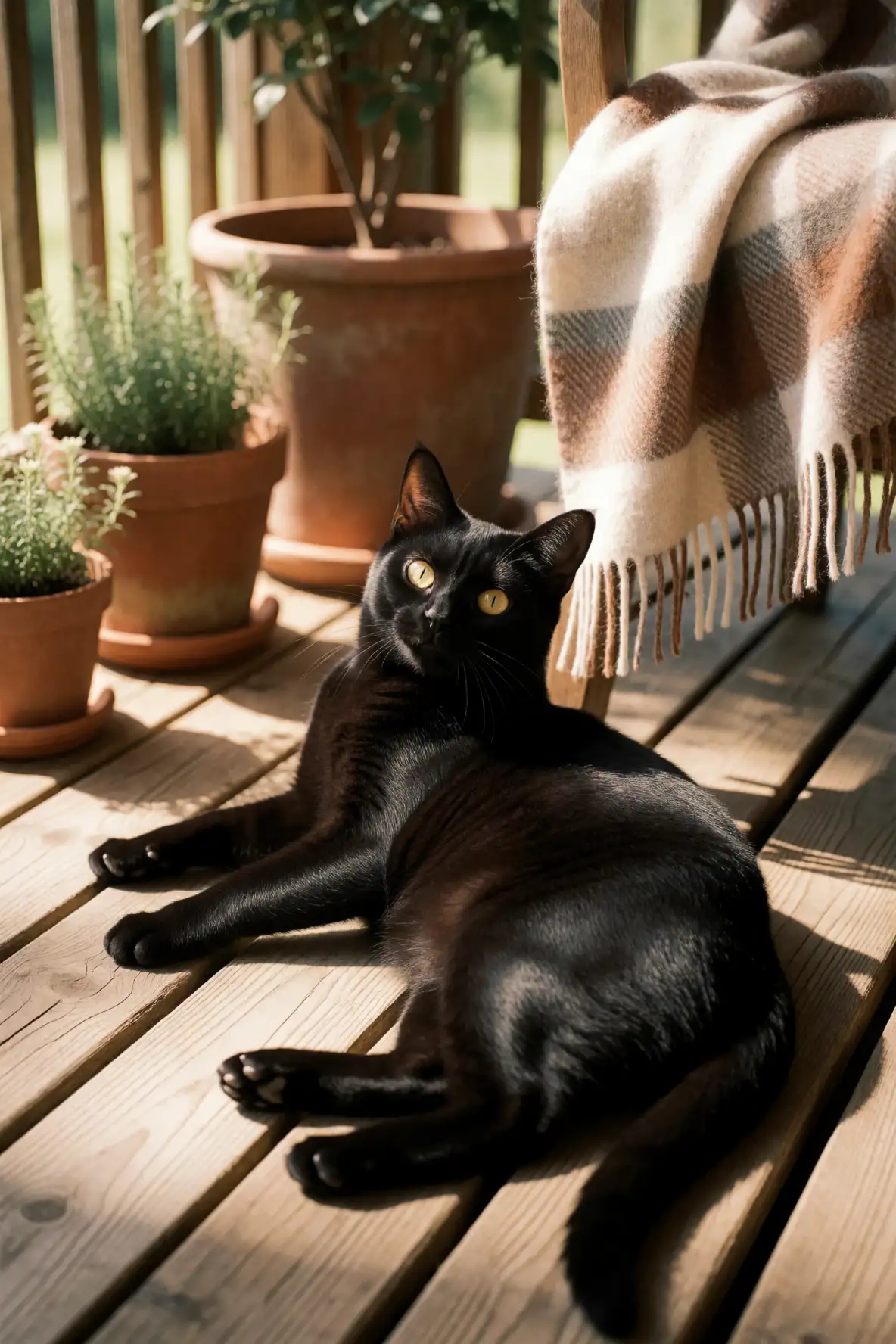
The Bombay cat looks like a miniature black panther and acts like one too — up to a point. Sleek, jet-black, copper-eyed, and intensely people-focused, the Bombay has a personality that is immediately distinctive from the moment you bring one home. They are confident, social, heat-seeking, and surprisingly dog-like in their attachment to their owner. Understanding what is normal Bombay behaviour — and what signals stress, illness, or a problem that needs addressing — is one of the most useful things you can know as a Bombay owner.
This guide covers the full picture: the Bombay's characteristic normal behaviours explained, specific abnormal behaviours and what each might mean, how the Bombay compares to its parent breeds the Burmese and American Shorthair, and when to call a vet versus when to adjust the environment.
You can read the full Bombay breed profile on CatHatch or browse available Bombay kittens from verified US breeders.
Normal Bombay Cat Behaviours
The Bombay is a distinctive breed with a set of characteristic behaviours that can surprise owners expecting a more independent or reserved cat. These are all normal for the breed — understanding them prevents unnecessary worry and helps you provide the right environment.
Following You Everywhere — The "Shadow" Behaviour
Bombay cats follow their owners from room to room with a consistency that many first-time Bombay owners find almost startling. They will accompany you to the bathroom, wait outside the shower, position themselves near you while you work, and relocate every time you move to a different part of the house. This is not neediness or anxiety — it is a core Bombay trait that reflects the breed's intense human orientation. Bombays genuinely prefer to be wherever their person is. If you find your Bombay constantly underfoot, that is normal. If they suddenly stop following you, that is worth noting.
Seeking Warmth Obsessively
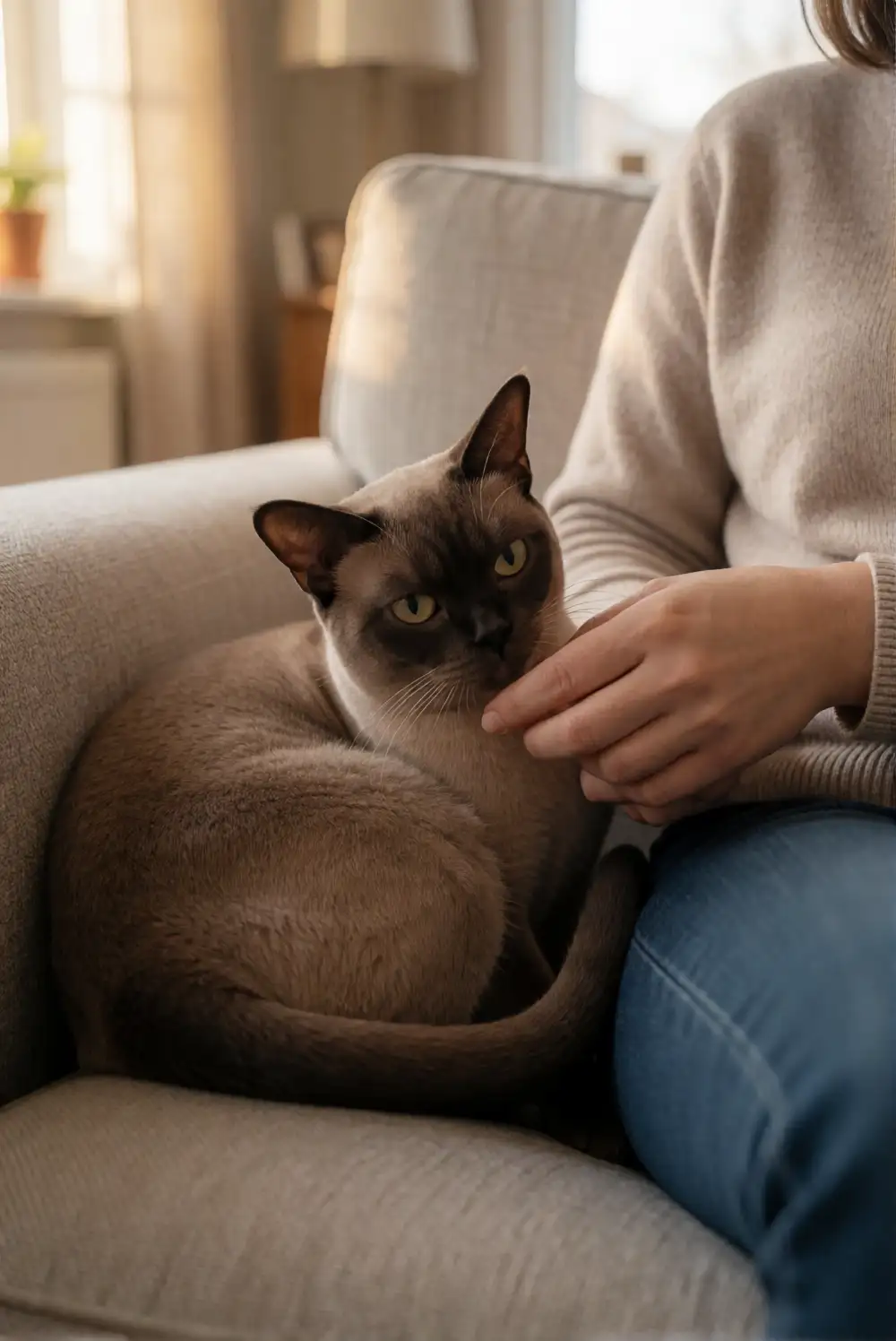
Bombays are heat-seekers to a degree that stands out even among affectionate breeds. They gravitate toward warm spots with purpose: sunny patches on the floor, radiator tops, warm laptops, the spot on the sofa you just vacated, and most frequently, directly on top of or pressed against their owner. This behaviour is partly inherited from the Burmese, one of the Bombay's two parent breeds, which shares the same warmth-seeking intensity. A Bombay who burrows under blankets, drapes themselves across your chest, or claims your lap within seconds of you sitting down is behaving entirely normally. This is not a sign of insecurity — it is simply what Bombays do.
Asserting Household Dominance
Bombays have a strong sense of hierarchy and tend to consider themselves the natural ruler of any household. They are not aggressive about it, but they are assertive. They will claim the best sleeping spots, position themselves at the highest point in a room, and expect their preferences — meal timing, play sessions, lap access — to be respected. In multi-cat households, a Bombay will usually establish itself as the top cat regardless of whether it is the oldest resident. This is normal Bombay behaviour and is not something that needs correcting unless it crosses into genuine aggression toward other animals or blocking access to essential resources.
Dog-Like Behaviour: Fetch, Greetings, and Leash Walking
The Bombay is one of a small number of cat breeds that genuinely behaves in ways more associated with dogs. Many Bombays learn to play fetch spontaneously, without any training — they retrieve thrown toys and bring them back to be thrown again. They greet owners at the door when they arrive home. Many take to leash training more readily than most breeds. They often learn their name and come when called with reliability unusual in cats. If your Bombay fetches, greets you at the door, or follows voice commands, this is normal Bombay behaviour — not a sign of confusion about being a cat.
High Vocality — Talking Back
Bombays are vocal cats. They have an opinion on meal timing, on the emptiness of their water bowl, on the fact that you have not paid attention to them for the past twenty minutes, and they express it. Their voice is softer and less piercing than a Siamese but more persistent than many breeds. They chirp, trill, and meow conversationally — many owners describe it as the cat genuinely participating in a dialogue. If you speak to your Bombay and they meow back, this is normal and characteristic of the breed. A sudden increase in vocalisation, or a change in the quality of the sound (more urgent, distressed, or different in pitch), is worth investigating.
Intense Play Drive
Bombays are athletic, agile, and genuinely playful well into adulthood. They stalk, pounce, and chase with focus and intensity. Unlike more casual breeds, a Bombay engaged in play is fully engaged — not half-distracted. They can be quite rough in play, especially as young cats or when under-stimulated. They enjoy wand toys, puzzle feeders, and any interactive game that requires physical and mental engagement. A Bombay who has not had adequate play in a day will often escalate — pouncing on ankles, knocking things off surfaces, or demanding attention in increasingly insistent ways. This is normal behaviour communicating that they need stimulation, not a behaviour problem.
Cuddling on Their Own Schedule
Despite their intense affection for their owners, Bombays are not passive lap cats who simply drape themselves wherever placed. They choose when to cuddle, and they choose based on their own comfort and social preferences rather than yours. A Bombay who decides they want to sit on your lap will be very much present; a Bombay who is not in the mood will relocate. This selective quality is normal and healthy — it reflects a confident, self-possessed personality rather than detachment.
Observing from High Positions
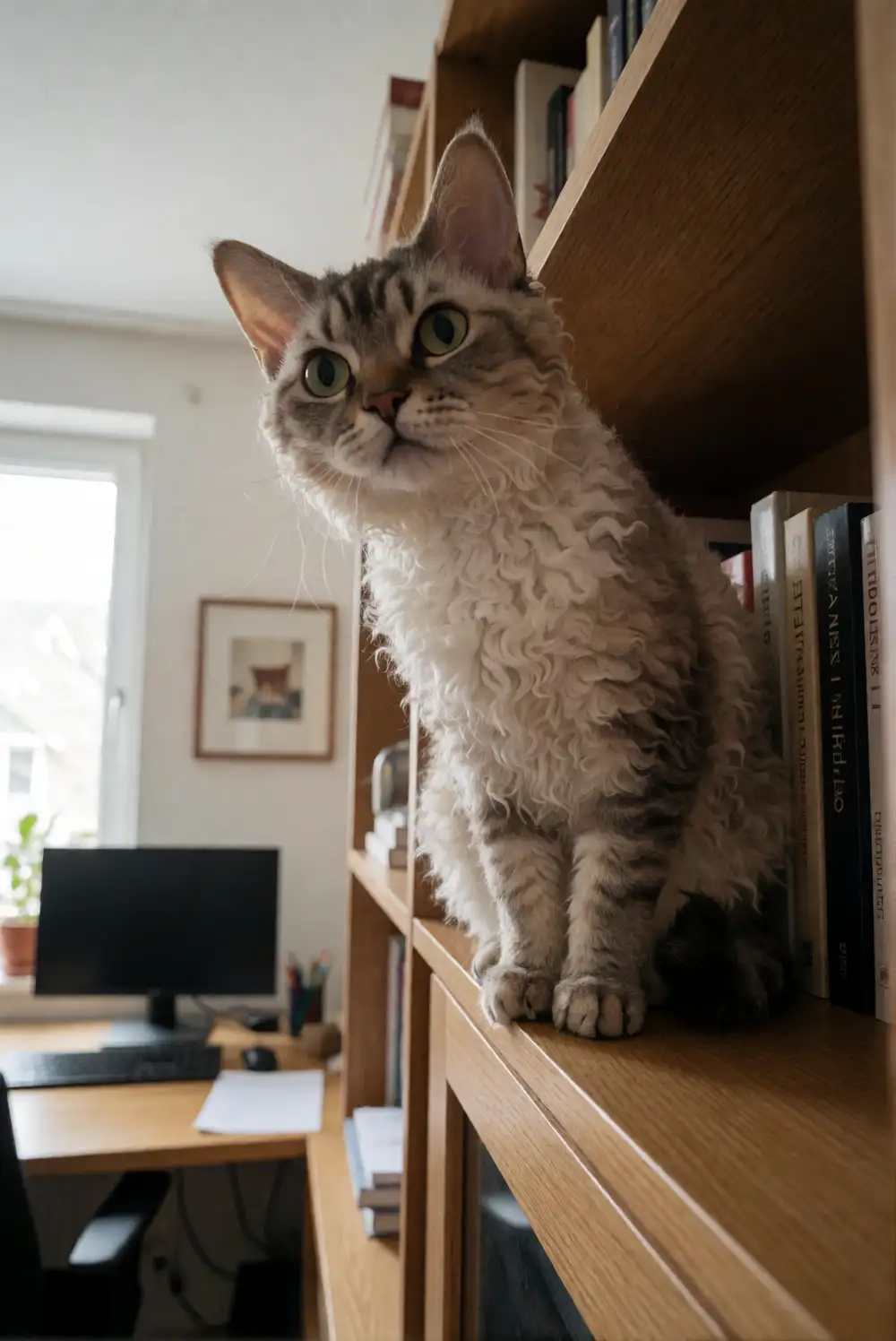
Bombays enjoy height and will seek out elevated positions — the tops of bookshelves, refrigerators, wardrobes, and cat trees — from which to observe the household. This is a normal feline behaviour with a Bombay twist: they use these positions actively, watching everything below with obvious attention, before descending to interact. A Bombay who spends time at height is not being antisocial — they are doing reconnaissance before re-entering the action.
Bombay Behaviours That Are Not Normal: What They Signal
The Bombay's characteristic behaviours are distinctive enough that deviations from them are usually meaningful. Here is what to watch for and what each change typically indicates.
Sudden Withdrawal and Hiding
What it looks like: A Bombay who normally follows you everywhere suddenly disappears to a corner, under the bed, or behind furniture. They do not emerge for meals at normal times, resist being approached, and are not present in their usual spots.
What it usually means: This is one of the clearest signals that something is wrong, and in an extroverted breed like the Bombay it should never be dismissed as "just a cat being a cat." The most common causes are illness or pain (cats instinctively hide when unwell), a significant environmental stressor (a new animal, a person they find threatening, construction or loud noise), or a traumatic event. If hiding persists beyond 24 hours with no obvious environmental trigger, a vet visit is warranted. Do not wait for other symptoms to appear — hiding itself is a symptom.
Loss of Appetite or Changes in Eating Patterns
What it looks like: Leaving food untouched, eating significantly less than usual, showing interest in food but not eating, or conversely, suddenly eating dramatically more.
What it usually means: Bombays are typically enthusiastic and consistent eaters — appetite changes are a reliable signal. Reduced appetite can indicate dental pain, nausea, gastrointestinal issues, fever, or systemic illness. Increased appetite with weight loss can suggest hyperthyroidism or diabetes. Any appetite change lasting more than 24–48 hours warrants a call to your vet. Do not assume the cat is "just being picky" — Bombays are not typically fussy eaters.
Litter Box Issues
What it looks like: Urinating or defecating outside the litter box, straining in the litter box, crying while using it, visiting the litter box frequently with little output, blood in urine or stool.
What it usually means: This requires prompt veterinary attention. Urinary tract infections, bladder blockages (more common in males and genuinely dangerous), kidney disease, constipation, and inflammatory bowel disease all present through litter box changes. A male cat who is straining to urinate and producing little or nothing is a veterinary emergency — urinary blockages can be fatal within 24–48 hours if untreated. Do not wait this one out.
Occasionally, litter box avoidance has a behavioural rather than medical cause — a dirty tray, a tray in a location the cat finds threatening, or a change in litter type. But rule out medical causes first.
Aggression Toward People or Other Pets
What it looks like: Unprovoked hissing, swatting, biting, or growling at family members or other pets they previously got along with. This is distinct from play aggression (see below).
What it usually means: Sudden onset aggression in a previously friendly Bombay is almost always pain-related. A cat in pain — from dental disease, arthritis, an internal condition, or an injury — will often redirect that pain as aggression toward anyone who approaches them. This is not a personality change; it is a pain response. Vet visit first. If medical causes are ruled out, stress-related aggression (from a new animal, a change in household composition, or chronic environmental stress) is the next most likely cause and benefits from environmental adjustments and sometimes professional behavioural advice.
Play Aggression vs Real Aggression
What it looks like: Pouncing on ankles, biting hands during or after play, chasing and ambushing people or other pets.
What it usually means: This is usually not aggression — it is an under-stimulated Bombay using available targets because they have not had enough play. Bombays who are bored escalate. The solution is more structured interactive play (two 15–20 minute sessions per day with a wand or interactive toy), not punishment. Punishing play aggression in cats is counterproductive and damages trust. If play aggression is directed at a specific person only or started suddenly in an adult cat with no history of it, consider whether that person has done something to trigger fear or pain association.
Excessive or Changed Vocalisation
What it looks like: Significantly more meowing than usual, vocalising at unusual times (particularly at night), a change in the pitch or quality of their voice, or yowling.
What it usually means: An increase in night-time vocalisation in an older Bombay can be an early sign of cognitive dysfunction (feline dementia) or hyperthyroidism — both conditions that become more common after age 10. In younger cats, sudden increased vocalisation often signals pain, confusion, or significant stress. A yowling female who has not been spayed is likely in heat. Yowling in a male who has not been neutered signals the same drive. If your cat is already spayed or neutered, persistent yowling needs veterinary investigation.
Overgrooming or Coat Changes
What it looks like: Licking specific body areas excessively, creating bald patches or skin irritation; or conversely, a coat that has become dull, matted, or unkempt when the cat has always been a tidy self-groomer.
What it usually means: Overgrooming in a specific area often indicates localised pain or itching — a skin condition, an allergy, a parasite (fleas, mites), or internal pain that the cat is trying to address by licking. Full-body overgrooming is more commonly stress-related. A Bombay whose coat has become dull or who has stopped grooming themselves adequately is often unwell — a cat's self-grooming standards drop when they feel too unwell to maintain them. This is a meaningful signal in a breed known for its sleek, glossy black coat.
Sudden Clumsiness or Changed Movement
What it looks like: Misjudging jumps, falling off surfaces they normally navigate easily, an altered gait, reluctance to jump up or down, or favouring one limb.
What it usually means: Any change in coordination or movement in a cat who was previously agile warrants investigation. In older Bombays, this can be arthritis making jumping painful, or early signs of neurological change. In cats of any age, sudden clumsiness can indicate an ear infection (affecting balance), a head injury, or neurological issues. Limping always needs veterinary attention — cats rarely limp from minor sprains the way dogs do, and limping in a cat usually indicates something more significant.
Changes in Water Intake
What it looks like: Drinking significantly more water than usual, or appearing to seek water from unusual sources (taps, cups, plant saucers).
What it usually means: Increased thirst in cats is a classic symptom of several serious but manageable conditions: diabetes mellitus, hyperthyroidism, and chronic kidney disease are the most common. All are more likely in middle-aged to older cats (7+) and all are treatable when caught early. If you notice your Bombay drinking more, have their bloodwork and urine checked at the vet. This is one of the most valuable early warning signs to catch.
Bombay Behaviour with Other Pets
The Bombay is sociable with other animals but brings a confident, dominant energy to multi-pet households. Understanding how they naturally behave with other animals helps set appropriate expectations.
With Other Cats
Bombays generally get along with other cats, but they tend to establish themselves as the dominant animal in the household — regardless of whether other cats were there first. This dominance is usually expressed through controlling access to resources (prime sleeping spots, the best perch, the food bowl), rather than through physical aggression. A Bombay who bullies a more submissive cat to the point of preventing access to food or the litter box is a problem that needs addressing through environmental management (separate feeding stations, multiple litter boxes in different locations, separate sleeping areas). A Bombay who simply occupies the best chair is just being a Bombay.
Introductions between a new Bombay and resident cats should be slow and structured — a week or two of scent exchange before face-to-face meeting gives the best outcome. Rushing introductions with a confident breed like the Bombay can create tensions that take months to resolve.
With Dogs
The Bombay's dog-like confidence means they often coexist with dogs better than more reserved breeds. They are less likely to flee and trigger chase instincts, and more likely to stand their ground and establish mutual boundaries early. That said, the dog's temperament matters more than the Bombay's — a cat-savvy dog who has been properly introduced to a Bombay will usually coexist peacefully within weeks. A dog with high prey drive needs very careful management regardless of how confident the cat is.
With Children
Bombays are generally good with children who know how to interact with cats. Their tolerance of handling and their sociable nature mean they do not typically flee or hide from children the way more timid breeds do. However, their assertiveness means they will express displeasure at rough handling — a growl, a swat with claws retracted, or removing themselves from the situation. Children should be taught to read these signals and respect them rather than pursuing the cat when it leaves. A Bombay who has learned that retreating solves the problem is far less likely to escalate to scratching.
Bombay Behaviour by Life Stage
Kitten (0–12 Months)
Bombay kittens are extremely active, intensely curious, and occasionally chaotic. They investigate everything at speed, play hard, climb anything available, and have not yet developed the measured confidence of an adult Bombay. Kittens who knock things over, scale curtains, or play-bite with enthusiasm are behaving normally. The priority at this stage is providing abundant enrichment — tall cat trees, multiple toys rotated regularly, daily interactive play sessions — and beginning socialisation with different people, sounds, and if appropriate, other animals.
Adult (1–8 Years)
The adult Bombay settles into the characteristic breed personality: confident, social, playful but more measured, and deeply bonded to their household. This is when the dog-like traits become most apparent — the greeting at the door, the consistent following, the preference for being in the same room. Adult Bombays still need substantial daily play (at minimum one 15–20 minute interactive session) to stay mentally and physically healthy. Under-stimulated adult Bombays become demanding or destructive.
Senior (9+ Years)
Senior Bombays typically slow down gradually rather than suddenly. A gradual reduction in play intensity and jumping frequency from around 9–10 years is normal. What is not normal: sudden changes in any behaviour, new vocalisations, altered litter box use, weight loss, or changes in water intake. Bombays over 8 should have bi-annual vet check-ups rather than annual, allowing for earlier detection of the conditions (hyperthyroidism, kidney disease, diabetes, dental disease, cognitive decline) that become more common with age. Bloodwork and urine analysis at every senior check-up gives you the earliest possible warning of developing issues.
Quick Reference: Normal vs Not Normal
- Following you room to room — Normal
- Sleeping on or against you for warmth — Normal
- Claiming the highest spot in the room — Normal
- Playing fetch or coming when called — Normal (and characteristic)
- Chatting back when spoken to — Normal
- Rough play including ankle-pouncing — Normal if under-stimulated; increase play sessions
- Suddenly hiding and not emerging — Not normal; investigate
- Appetite loss for more than 24 hours — Not normal; vet
- Straining in the litter box — Not normal; vet same day (emergency if male)
- Sudden unprovoked aggression — Not normal; likely pain; vet
- Increased night-time vocalisation — Not normal in adults; vet
- Bald patches from overgrooming — Not normal; vet
- Clumsiness or changed gait — Not normal; vet
- Drinking significantly more water — Not normal; vet (bloodwork)
- Dull or unkempt coat in a previously tidy cat — Not normal; often signals illness
Frequently Asked Questions
Why does my Bombay cat follow me everywhere?
This is one of the most characteristic Bombay behaviours and is entirely normal. Bombays are unusually people-oriented even by cat standards — they bond intensely with their family and prefer to be wherever their person is. It is sometimes called "shadow behaviour" and is a trait inherited from the Burmese side of their ancestry. It is not a sign of anxiety or insecurity; it is simply what Bombays do. The behaviour to watch for is the opposite — a Bombay who suddenly stops following you.
Are Bombay cats supposed to be this vocal?
Yes — Bombays are a moderately vocal breed that communicates freely with their owners. They meow, chirp, trill, and generally participate in household conversation. Some individuals are more vocal than others, but persistent chattiness is normal for the breed. What warrants attention is a sudden significant increase in vocalisation, particularly if accompanied by other changes, a change in the quality of the sound (distressed, urgent, or different pitch), or persistent yowling — especially at night in an older cat.
My Bombay cat is suddenly aggressive — what is happening?
Sudden aggression in a previously friendly cat almost always has a medical cause. Pain is the most common — dental disease, arthritis, an injury, or an internal condition can make a cat redirect their discomfort as aggression toward anyone who approaches them. The first step is always a veterinary examination to rule out physical causes. If the cat gets a clean bill of health, then environmental stressors (a new animal, a change in household routine, a threatening outdoor presence) become the focus. Punishing aggression in cats is counterproductive — it increases fear and escalates the problem.
Why does my Bombay sleep on me or pressed against me?
Bombays are heat-seekers who are strongly drawn to the warmest available surface — which is frequently their owner. This behaviour comes directly from the Burmese ancestry and is deeply characteristic of the breed. It is a sign of trust and affection, not of the cat being cold (though they do feel cold more readily than many breeds). Providing a heated cat bed or blanket can give them an alternative warm option if you need personal space, but do not be surprised if they choose you anyway.
Is it normal for a Bombay cat to play fetch?
Yes — fetch is a recognised Bombay characteristic. Many Bombays learn to retrieve thrown toys spontaneously without any training, and then bring them back to be thrown again. This is a dog-like behaviour that the breed is well known for. If your Bombay does this, enjoy it — it is one of their most distinctive and entertaining traits, and an excellent way to provide interactive play that satisfies their significant play drive.
My Bombay is hiding under the bed and won't come out — should I be worried?
Yes, in a Bombay this warrants prompt attention. Hiding is a significant behavioural change in a breed defined by its social, following nature. A Bombay who is hiding has good reason — most commonly illness or pain. If there is no obvious immediate environmental trigger (a visitor they are afraid of, a loud noise event) and the hiding persists beyond a few hours, call your vet. Do not wait for additional symptoms. Hiding itself is a symptom in this breed.
How much play does a Bombay cat need?
More than most breeds. Adult Bombays need at minimum one or two structured interactive play sessions per day of 15–20 minutes each — wand toys, chase games, or anything that gets them running and pouncing. Without adequate play, Bombays redirect their energy into demanding or destructive behaviour: ankle-pouncing, knocking things off surfaces, persistent meowing for attention. Puzzle feeders and food-dispensing toys can supplement interactive play during the day when you are busy. Think of the Bombay's play need as closer to a dog's exercise need than to a typical cat's.
My Bombay is drinking a lot more water than usual. Is that normal?
No — increased water consumption in cats is a meaningful symptom, not a normal variation. The three most common causes are diabetes mellitus, hyperthyroidism, and chronic kidney disease, all of which are conditions that respond well to treatment when caught early. If you have noticed your Bombay drinking noticeably more than usual — visiting the water bowl more frequently, drinking from unusual sources — have their bloodwork and urine tested at the vet. Do not wait for other symptoms to appear; catching these conditions early makes a significant difference to outcomes and quality of life.
Ready to find your Bombay? Browse available Bombay kittens from verified breeders across the USA on CatHatch, read the full Bombay breed profile, or explore related breeds including the Burmese and the American Shorthair.
Ready to Find Your Kitten?
Browse available kittens from verified breeders across the USA.