Who This Guide Is For
Choose a grooming tool that suits your cat’s coat and comfort level, rather than reaching for the most aggressive-looking brush. This guide is for cat owners who want to collect loose fur during routine grooming and make sessions easier to manage.
Short-haired cats often need a gentler tool than long-haired cats with a dense undercoat. Age, temperament, skin sensitivity, and past grooming experience matter too. If your cat’s coat or skin changes suddenly, or grooming reveals a concern, ask a veterinarian for guidance.
Features to Compare
Look at the tool’s working surface, tooth spacing, handle grip, and ease of cleaning. Rounded or smooth tips can feel gentler, while closely spaced teeth may catch more loose fur but can tug if used roughly or on tangles.
- Coat match: Consider coat length, thickness, and whether your cat has a dense undercoat.
- Comfort: Choose a tool you can use with light pressure and short strokes.
- Control: A comfortable handle helps you avoid pulling or pressing hard.
- Maintenance: Check how easily fur can be removed from the tool.
Soft Bristle Brushes
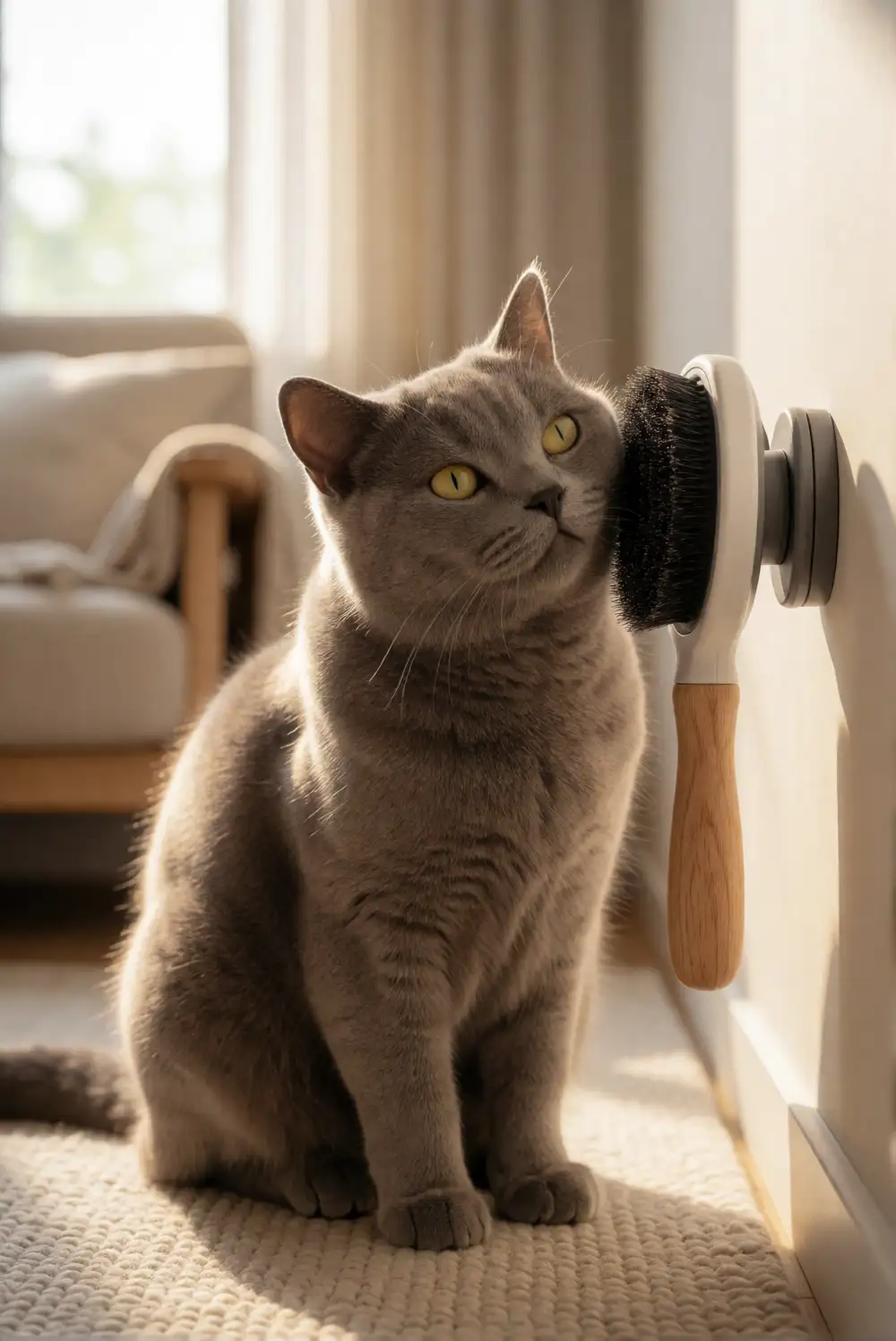
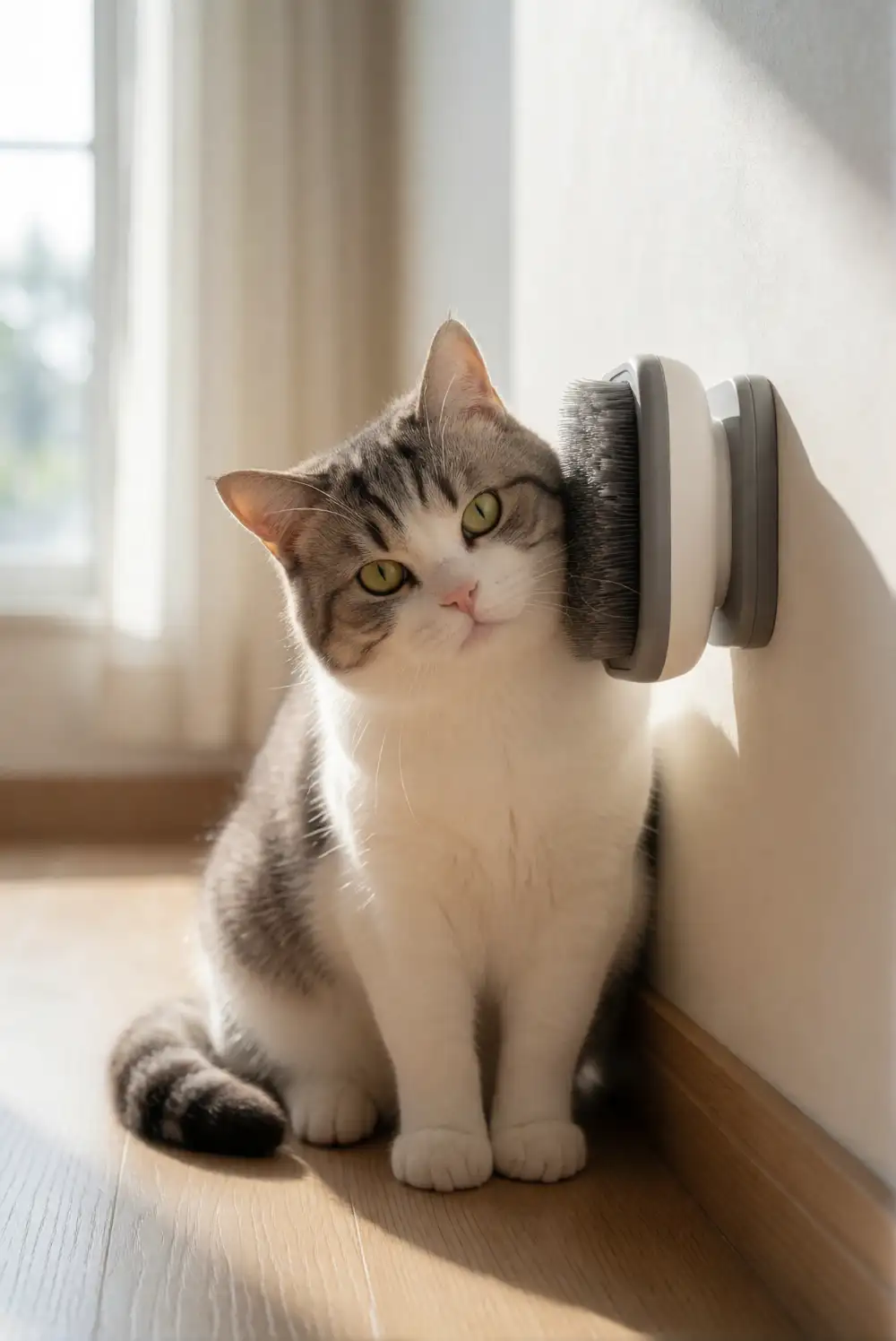
A soft bristle brush can suit short-haired cats and cats who are new to grooming. It offers a gentle way to smooth the coat and pick up some loose surface fur, but may not reach through a thick coat or collect much undercoat.
Compare soft bristle brushes for cats if your cat prefers light, familiar contact and has a coat that does not need a deeper comb-through.
Slicker Brushes
A slicker brush has fine wire bristles and can be useful for some medium- or long-haired coats. Work in small sections with a light touch; pressing hard or repeatedly brushing one spot can irritate skin. It may be too scratchy for a sensitive cat or an inexperienced groomer.
Consider slicker brushes for cats when you want to work through loose surface fur and your cat tolerates the feel.
Metal Combs
A metal comb with widely spaced teeth can help you check longer fur for small tangles, while a finer section may pick up loose hairs. It gives you close control, but combing through knots can pull. Pause at resistance rather than forcing the comb through.
Look at wide-tooth metal combs for cats for long-haired cats or for gently checking areas where the coat tends to tangle.
Undercoat Rakes
Undercoat rakes are intended for coats with a substantial undercoat, and may suit some dense-coated cats. They are not a one-size-fits-all choice: a rake can be too harsh for a fine, short, or sensitive coat, and overuse may break or pull hair. Use only light pressure and follow the tool’s instructions.
Compare undercoat rakes for cats if your cat has a thick coat and accepts gentle, brief grooming.
Grooming Gloves
A grooming glove can suit cats that resist brushes but tolerate being petted. Its flexible surface may collect some loose fur during gentle strokes, though it is less precise for separating long fur or checking for tangles.
Explore grooming gloves for cats if familiar petting feels less intimidating than a brush, and stop if your cat pulls away or becomes tense.
Fit, Grooming Routine, and Safety
Grooming tools are generally selected by coat type rather than a cat’s body measurements, so there is no standard brush size to match to weight. Choose a tool that lets you reach the coat without awkward pressure, and follow any size guidance provided for the tool. For a kitten, senior cat, or small cat, use especially gentle strokes and keep sessions short.
Start where your cat enjoys being touched and let them sniff the tool. Brush in the direction the coat lies, use light pressure, and take breaks. Avoid eyes, ears, whiskers, and delicate areas. Check the tool for damaged teeth or rough edges before each session, and keep it away from your cat when not in use.
Do not tug at tight mats or try to cut them out with scissors close to the skin. If a mat will not loosen easily, or your cat seems uncomfortable, ask a professional groomer or veterinarian what to do.
Common Buying Mistakes
- Choosing a tool just because it collects a lot of fur, without considering whether its surface suits your cat’s coat.
- Using an undercoat rake on a coat that is fine, short, or sensitive.
- Assuming one tool will detangle every knot or work equally well on every cat.
- Brushing longer or pressing harder when your cat is resisting. Short, calm sessions are a better starting point.
- Ignoring your cat’s signals. Stop if they repeatedly move away, flatten their ears, swish their tail, or seem distressed.
Quick Choice Summary
- Short coat or new to grooming: Start with a soft bristle brush or a grooming glove, depending on what your cat accepts.
- Long coat that needs checking for tangles: Try a wide-tooth metal comb and work slowly.
- Medium or long coat that tolerates brushing: A slicker may suit gentle, careful sessions.
- Dense undercoat: Consider an undercoat rake only if it is appropriate for the coat and your cat is comfortable with it.
Frequently Asked Questions
How often should I groom a cat that sheds?
It depends on coat length, thickness, and how your cat responds. Begin with brief sessions and adjust based on how the coat looks and how comfortable your cat seems.
Can one grooming tool work for every cat?
Usually, a tool that suits one coat or temperament may not suit another. Match the tool to your cat’s coat and comfort, and switch approaches if grooming causes pulling or distress.
Should I use an undercoat rake on a short-haired cat?
Not automatically. Rakes are intended for coats with an undercoat, and may be too harsh for some short, fine, or sensitive coats. Check suitability and use a light touch.
What should I do if my cat has a tight mat?
Do not pull at it or cut close to the skin. Ask a professional groomer or veterinarian for help if it does not loosen easily.
How can I help a cat get used to grooming?
Let your cat inspect the tool, start with a few gentle strokes in a comfortable area, and offer breaks. Stop if your cat appears distressed and try again another time.